

Groundbreaking celebrates start of Hertfordshire Fire and Rescue’s new Operational Live Fire Training facility
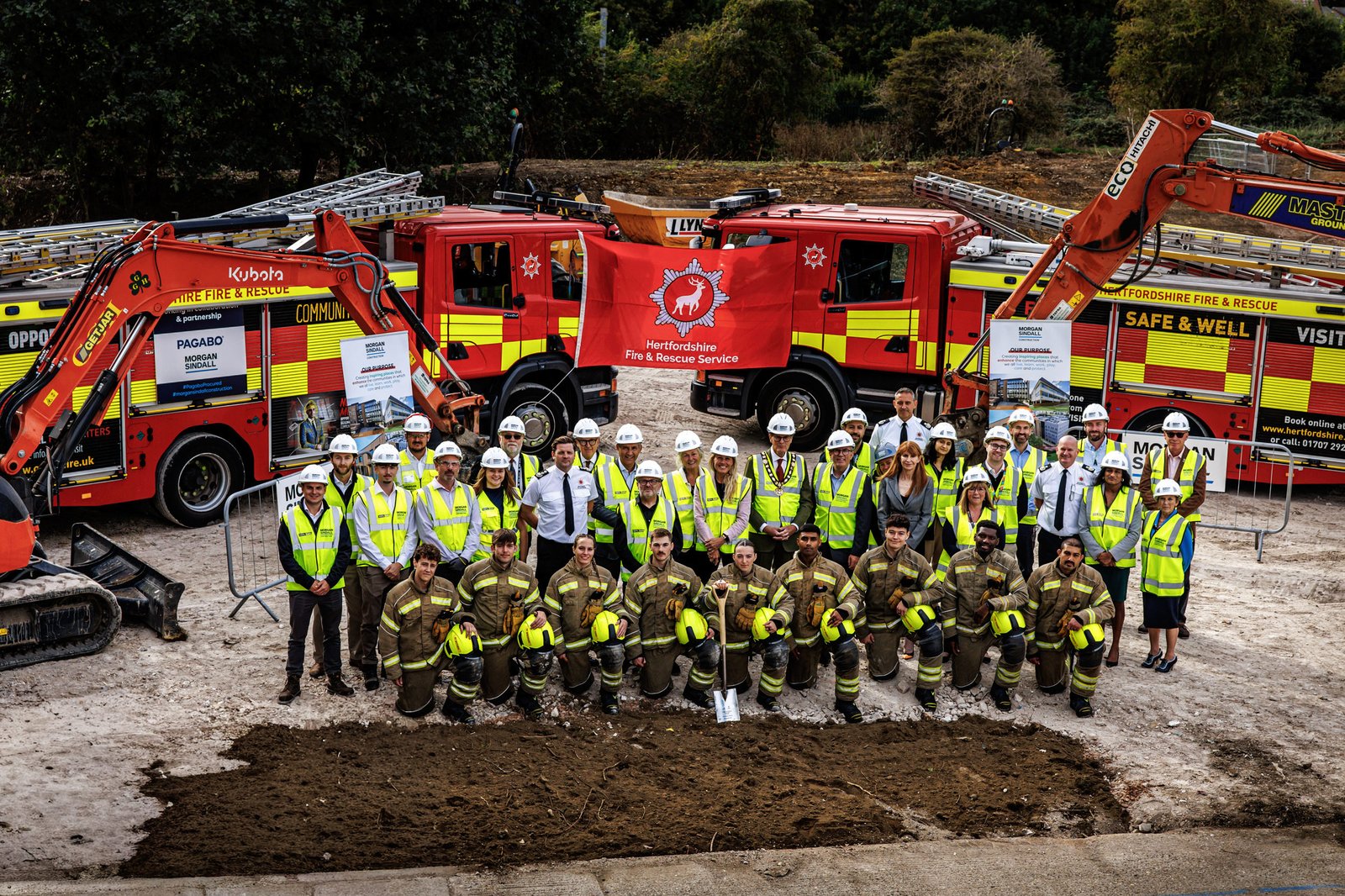
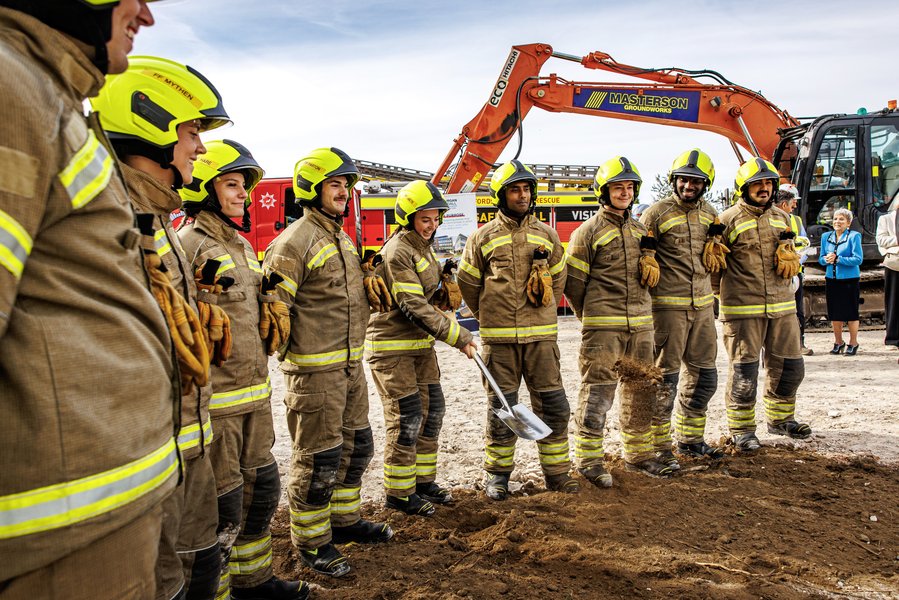
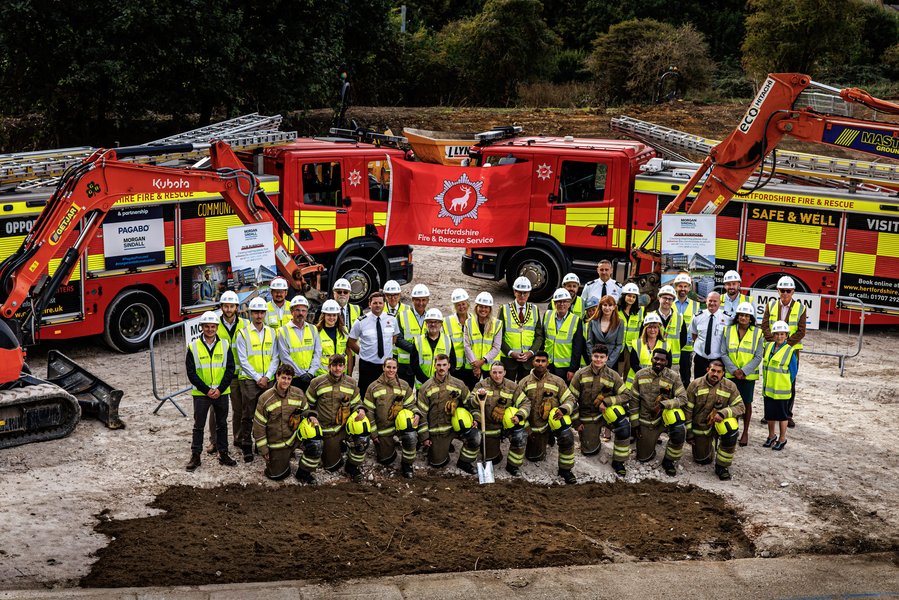
A ceremony has been held to mark construction work beginning on a live fire training complex in Stevenage that will allow Hertfordshire Fire and Rescue Service (HFRS) to practise their life-saving skills in a realistic environment.
Morgan Sindall Construction’s Northern Home Counties business was appointed by Hertfordshire County Council (HCC) to the project, which was procured via the Pagabo construction framework.
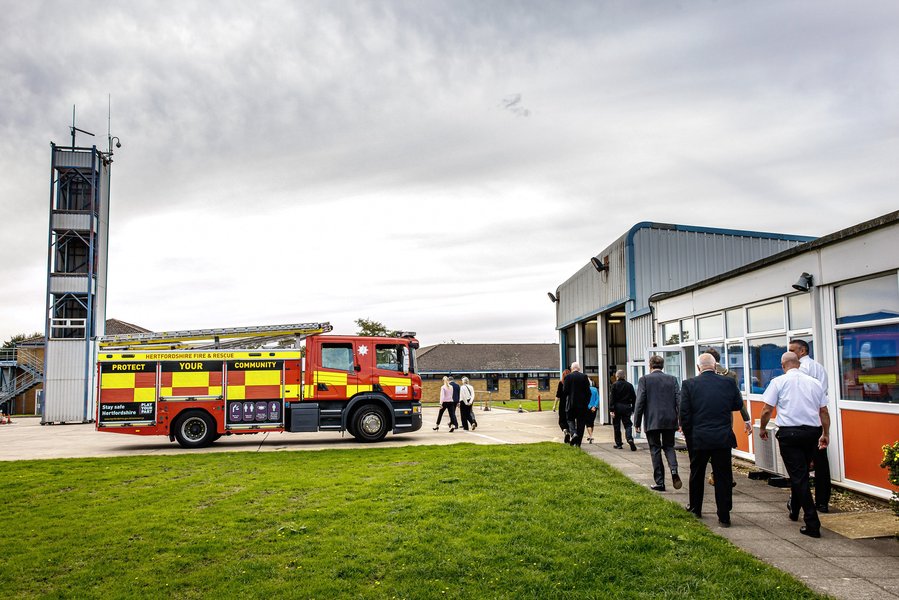
The event was attended by representatives from the project’s main stakeholders, including Councillor Ajanta Hilton, HFRS’ Chief Fire Officer Alex Woodman, HCC’s Director of Property Sass Pledger and Morgan Sindall’s Northern Home Counties Area Director Rod Pavey. During the ceremony, the guests were given a tour of the site, with speeches marking this key milestone and what it means for the county.
Located on the site of an existing HFRS training centre, the £14.8m project will provide a wide range of enhanced capabilities, including an Operational Live Fire Training Facility (OLFT) and road traffic collision training motorway. The project also includes construction of a new appliance bay and substation as well as refurbishment work to a support building and a new motorway training area including highway gantry rescue facilities.
The redevelopment will enable HFRS to deliver training that is more specific and realistic to the scenarios firefighters will encounter. To achieve this, the five-storey OLFT building will be purpose built to allow firefighters to train in situations with flames and smoke that are as near to real life as is safely possible. It will also provide roof access and working at height training.
To give the service flexibility to imitate different scenarios, the OLFT will incorporate a mix of settings, including flat roofs, pitched roof, garage fire, smoke search and rescue, and a block of flats and two semi-detached houses will incorporate areas such as lounges and bathrooms as well as stair cores and lifts. A gantry running around the outside of the flats section will simulate high-rise surroundings.
The nature of the structure, which must withstand regular fires and deal with the smoke this creates, raised several design and construction challenges. This includes being resistant to cyclic heating, in which regular heating and cooling can cause structural issues and increase rebar resizing and concrete coverage. To manage this unusual and difficult usage, Computational Fluid Dynamics (CFD) modelling, which analyses smoke characteristics and how heat transfers around buildings, has been factored into the design.
Special materials such as refectory tiles and highly durable bricks will be used to cope with the heat levels and protect the building’s fabric. A wide variety of other specialist building components, such as heat-resistant windows, doors, cabling, and M&E systems will be installed.
A series of sensors will be installed to monitor the tiles temperature and if the heat is too excessive the trainers will be alerted so that operations can be halted or adjusted accordingly. An emergency extract system and control centre with over-ride capabilities will ensure the building always stays safe.
Thanks to these design features, the reinforced concrete (RC) framed building will be able to accommodate fire behavioural spaces to study how fires burn. The fire service can also set carbonaceous fires, which generate more realistic levels of heat and smoke compared to LPG fires which many training facilities use.
To remove smoke created during the burns, a specialist smoke extraction and filtration system will be installed. Ducts above windows and doors will capture the smoke and process it through a water-based onsite filtration plant. This system is vital to both minimise carbon emissions and protect the local environment.
A full-scale replica of a six-lane motorway will be created so HFRS can undertake training exercises for motorway related incidents. This will include an overhead steel gantry, central reservation, hard shoulders, signage, and lighting so that night-time scenarios can be practised. HFRS will be able to lend the facility to other fire and police services for their training purposes.
Other construction work will include a new workshop and an appliance bay structure able to hold three fire appliances. External works will also be carried out, and a support building will be refurbished to incorporate clean rooms and a breathing apparatus training and control space.
The demanding, 24/7 nature of the site and HFRS’ work means the Morgan Sindall team will minimise inconvenience to the service’s operations as much as possible. The project team have planned construction activity and deliveries to ensure minimal disruption during the building work.
A key aspect of the project is to support HFRS with its sustainability goals. The digital carbon calculation tool CarboniCa has been utilised during the design, and the new facilities will target net zero energy through good thermal performance, air tightness, and PV panels on the roof to offset energy consumption. EV charging points will also be installed along with initiatives to increase local flora and fauna, such as putting in plant species to improve the site’s biodiversity.
Morgan Sindall has already begun a suite of social value activities as part of the project, including apprenticeships as well as school and fire brigade interactions.

Rod Pavey, Morgan Sindall Construction’s Northern Home Counties Area Director, said:
The groundbreaking ceremony marks an exciting moment in a development we know will play an important role in ensuring Hertfordshire Fire and Rescue Service have the facilities they need to train and prepare for their life-saving work.
The new Operational Live Fire Training Facility and mock motorway will significantly increase the range of scenarios that can be safely practised. Building spaces that can simulate real-world fires and deal with the resulting smoke is a complex task, and it’s a testament to the skills and experience of the Morgan Sindall team as well as the collaborative relationship we’ve developed with Hertfordshire County Council and fire service that we’re able to design and deliver such facilities.”
Councillor Ajanta Hilton, Executive Member for Public Health and Community Safety at Hertfordshire County Council, said:
This redevelopment represents a major investment in the future of Hertfordshire Fire & Rescue Service and demonstrates our commitment to keeping residents safe.
Our firefighters respond to some of the most challenging and demanding situations imaginable. It is vital that they have access to facilities that prepare them for those incidents safely and effectively. This redevelopment will ensure Hertfordshire remains at the forefront of firefighter training for many years to come."
Chief Fire Officer Alex Woodman said:
We are creating one of the most modern training facilities in the country, designed around our people, their safety and the needs of our communities.
This is a significant investment in our firefighters and staff. By providing world class training facilities and realistic operational environments, we are investing in their development, their safety and their ability to deliver the very best service to the people of Hertfordshire.”
Alongside transforming firefighter training capabilities, the redevelopment supports Hertfordshire County Council's sustainability ambitions. The facility has been designed with energy efficiency, environmental performance and long-term resilience in mind, incorporating low-carbon technologies where appropriate, efficient use of materials and sustainable construction practices.
ENDS